Kitchen
How Beeswax Wraps Replaced Our Plastic Wrap, For Good
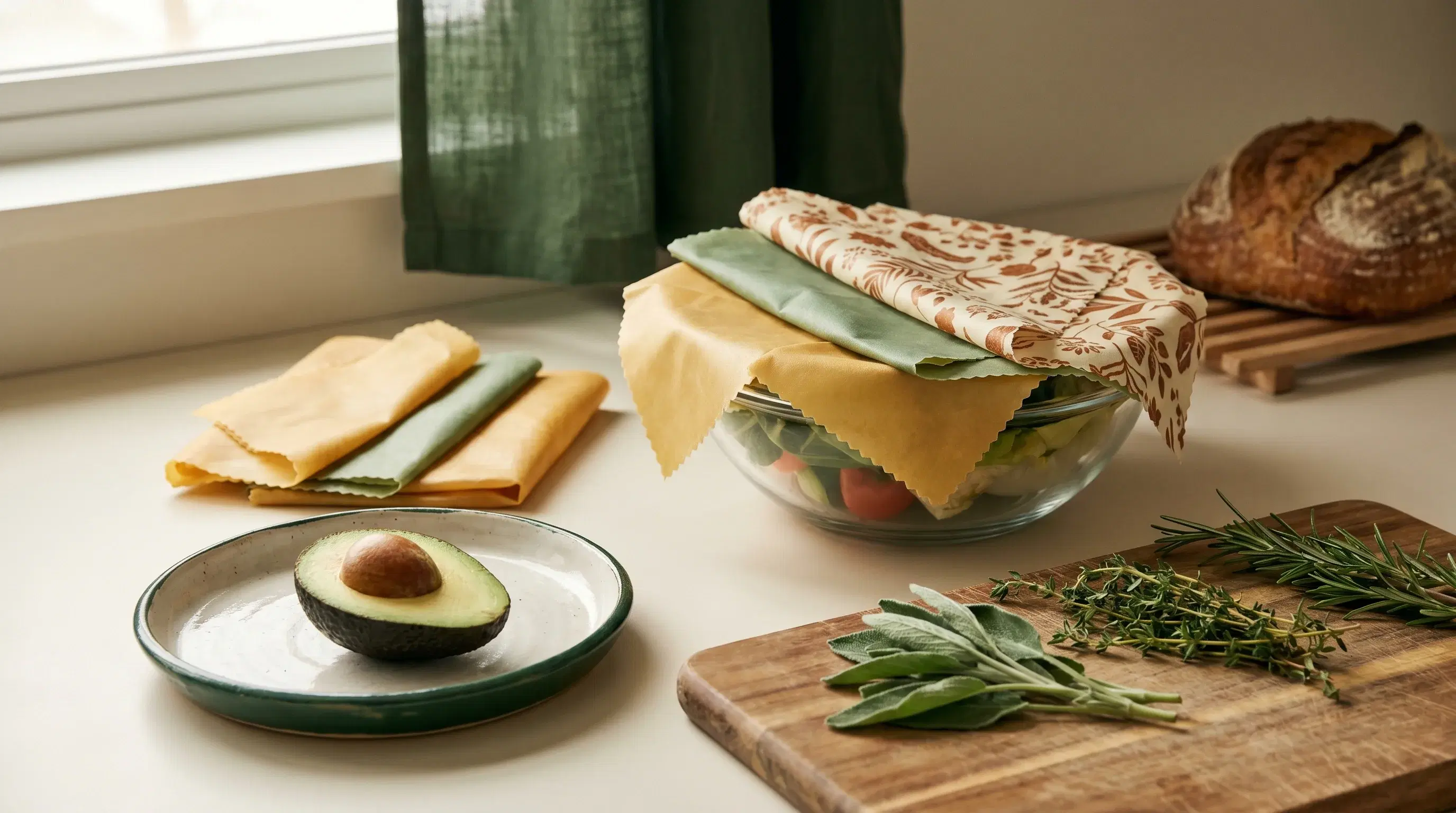
Plastic cling wrap was invented in 1933 and has barely changed since. It's also nearly impossible to recycle. Roughly 1.6 million miles of the stuff get used in American kitchens each year — enough to wrap the equator 64 times.
What we tried
- Silicone stretch lids — great for bowls, useless for wrapping cheese
- Glass containers with seals — perfect for storage, but you can't wrap a half-eaten avocado
- Beeswax wraps — the closest one-to-one replacement we found
- Vegan plant-wax wraps — same idea as beeswax, slightly less tacky but better for vegans
Why beeswax wraps work
The wax-coated cotton becomes pliable from your hand's warmth. You wrap, press, and release — the wax holds the shape. Wash in cool water with mild soap, hang to dry, and reuse for roughly a year.
“Three wraps replaced an entire roll of plastic wrap in our house in two weeks.”
What they're not for
Don't use them for raw meat (the wax doesn't sanitize between uses) or anything you need to microwave. For everything else — half-cut produce, cheese, sandwiches, bowl covers — they replace cling wrap completely.
Written by
Brittany & Nik
Part of the Zero Waste Simplified team. We write about the products, suppliers, and small daily habits that shape a plastic-free home.