Hair Care
A Beginner's Guide to Bar Shampoo
Switching from bottled shampoo to a bar is one of the highest-impact swaps you can make. It's also the one most likely to make you doubt your decision around day six. This guide is the one we wish we had when we started.
Choosing the right bar
Bar shampoos are formulated like solid shampoo, not like soap. The pH-balanced ones (most modern bars) won't strip color or trigger the dreaded scalp panic. Here's a quick guide:
- Fine or oily hair: look for clarifying bars with apple cider vinegar or rosemary
- Curly or coily hair: shea butter and coconut milk bars hold moisture
- Color-treated hair: pH-balanced 'gentle' or 'sulfate-free' formulas
- Dandruff-prone scalp: tea tree or charcoal bars
How to actually lather
Wet your hair completely. Run the bar between your palms or directly along your scalp four or five times. Set the bar down, then massage your scalp with both hands. Most beginners under-lather — you want a rich foam at the roots before you rinse.
The transition week
Around days four through ten, your scalp may feel waxy or heavy. This is the natural sebum re-balancing after years of detergent stripping. It always passes. A weekly apple cider vinegar rinse (one tablespoon to a cup of water) speeds the adjustment dramatically.
“Week two is when you'll know. After that, you'll never go back to bottles.”
Storage matters more than people think
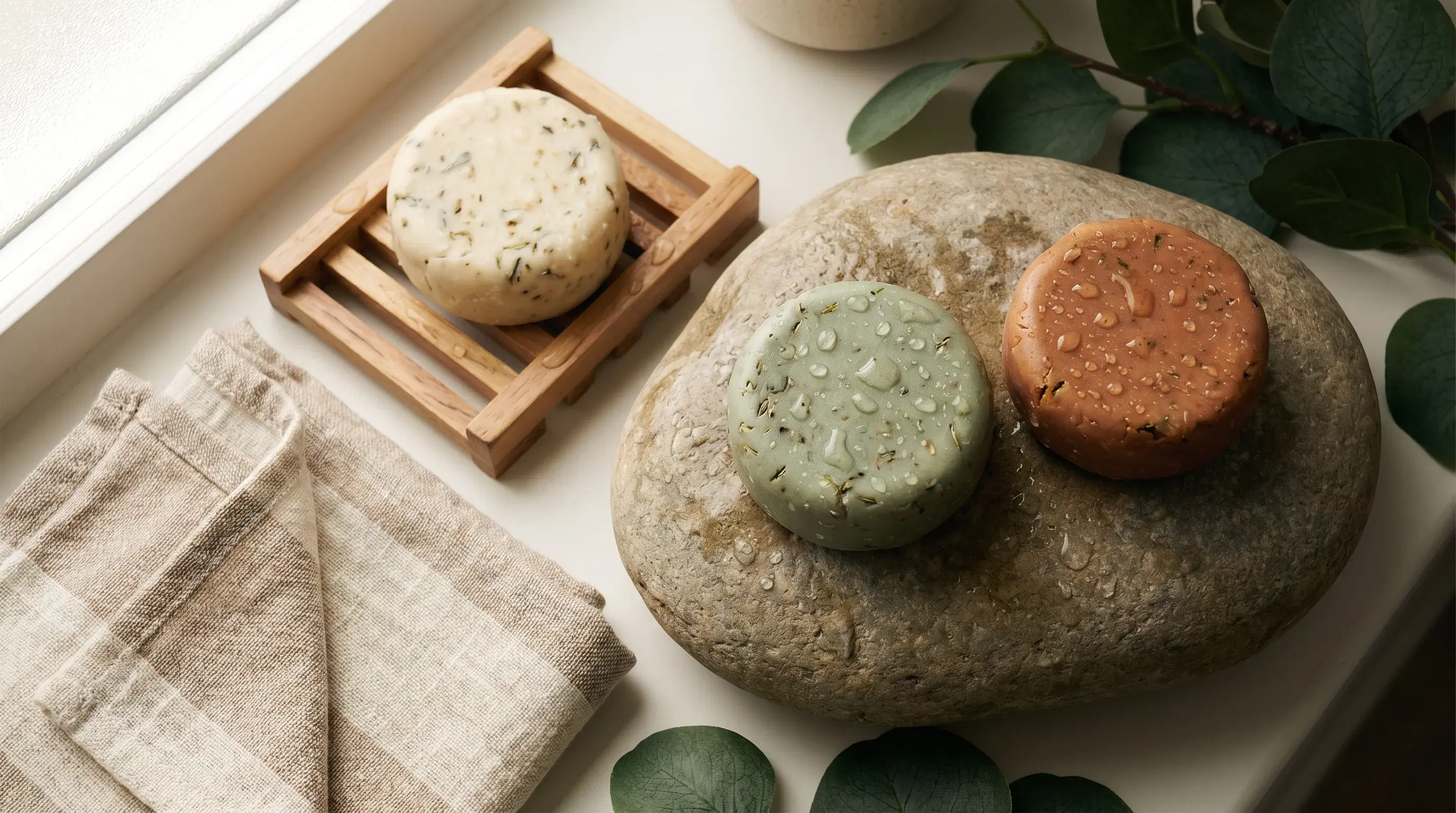
A bar that sits in standing water dies in two weeks. A bar on a draining dish lasts up to twelve. Buy a bamboo or stainless soap shelf — the small upfront cost more than pays for itself in extended bar life.
Written by
Brittany & Nik
Part of the Zero Waste Simplified team. We write about the products, suppliers, and small daily habits that shape a plastic-free home.